
Arcol has generated a lot of hype, but can it stand up to scrutiny? It raised an unusually substantial amount of VC funding for an early-stage startup, over $5 million according to Crunchbase, and over $20 million according to Arcol CEO Paul’s interview on the Archi-Tech network talk. Its promising value proposition was highly recognized by investors, including VC firms like Cowboy Ventures and Craft Ventures, as well as Dylan Field, co-founder and CEO of Figma; Amar Hanspal, co-founder and CEO of Motif and former co-CEO of Autodesk; and Tooey Courtemanche, founder of Procore.
Arcol resembles Figma for architects, a concept reflected in Arcol’s original manifesto, with a strong focus on collaboration between owners, contractors and architects in one place. Though collaboration is essential, incumbent tools often lack a smooth way to support it, giving Arcol a potential advantage.
This blog explores whether Arcol can replace incumbent tools and how AI and open-source platforms like Pascal Editor might change what it takes to compete.
Web-based real collaboration
Arcol’s main selling point is web-based collaboration between different AEC stakeholders. Rather than syncing with a Central Model, it reduces the collaboration barrier to simply sharing a link which anyone can jump in and leave a comment.
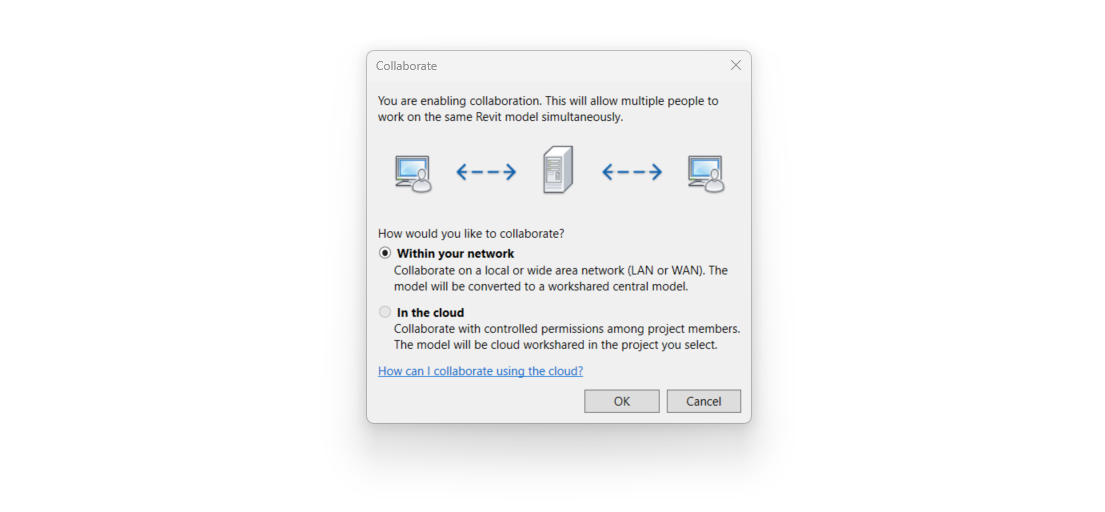
In comparison, Revit's collaboration is not as smooth, and the tools to work with workshared model feel stale and manual.
On the other hand, one advantage of Revit's collaboration is that architects, structural engineers, and MEP engineers can work efficiently in a shared environment. Each discipline can work in an isolated file that will be linked into coordination model. Revit shares a model through a free Autodesk viewer and creates a shared view in Revit, which is not dynamic: every model change requires resharing the view. It’s simply not as elegant as sharing a link in Arcol.
Revit's workshared models are built based on worksets that define scope of elements that can be edited by a single user at the time. While they can lighten heavy models and allow to focus on specific scope, they often cause element's ownership conflicts.
Design stages
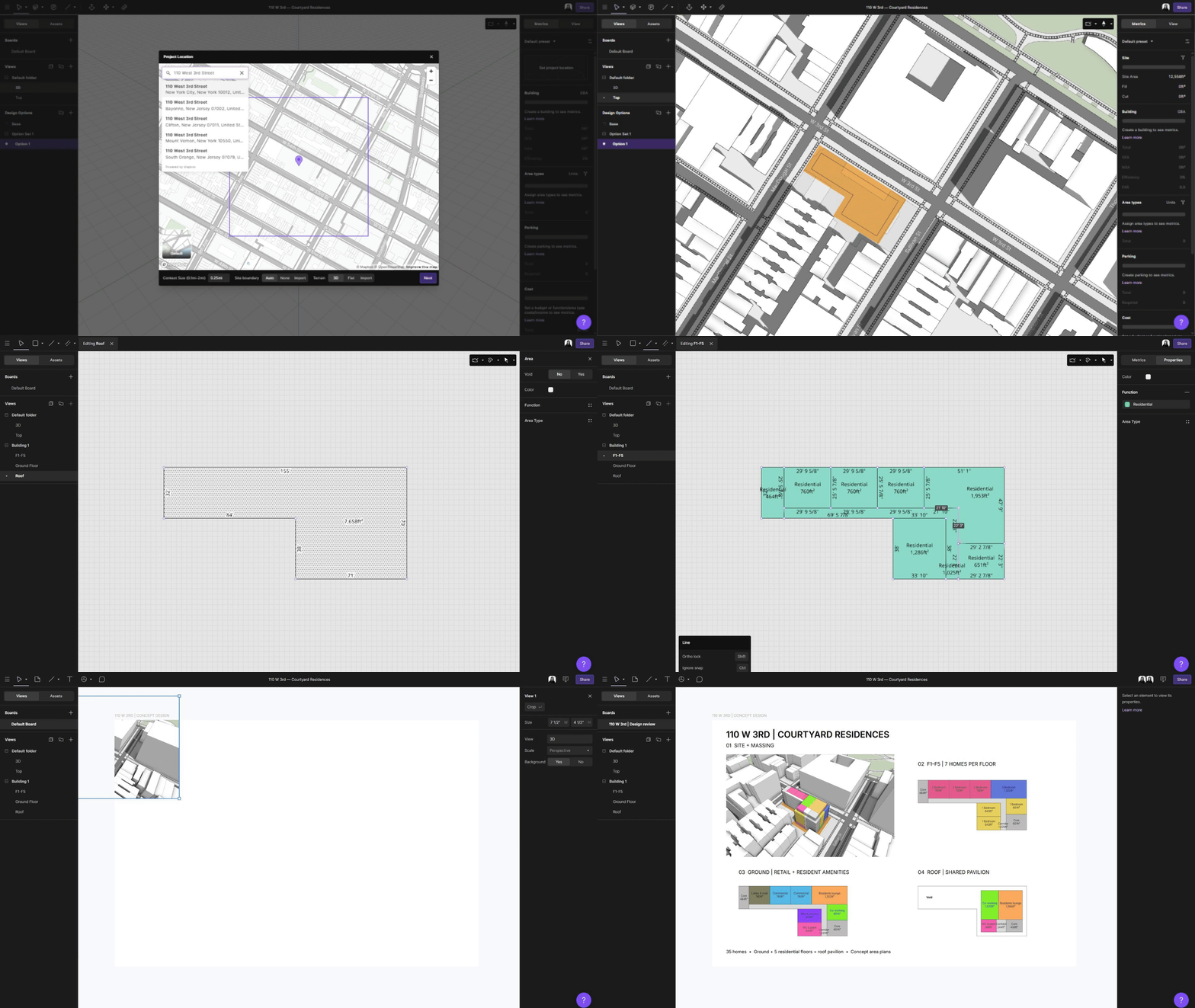
Among the main design stages, feasibility, schematic design, design development, and construction documentation, Arcol currently covers feasibility and conceptual design, with plans to cover later stages. There is already an abundance of tools for early design stages in AEC, including TestFit, Archistar, Giraffe, Hypar, Podium, and Skema. Therefore, covering these early design stages alone is not enough to serve as Arcol’s moat.
Urban context
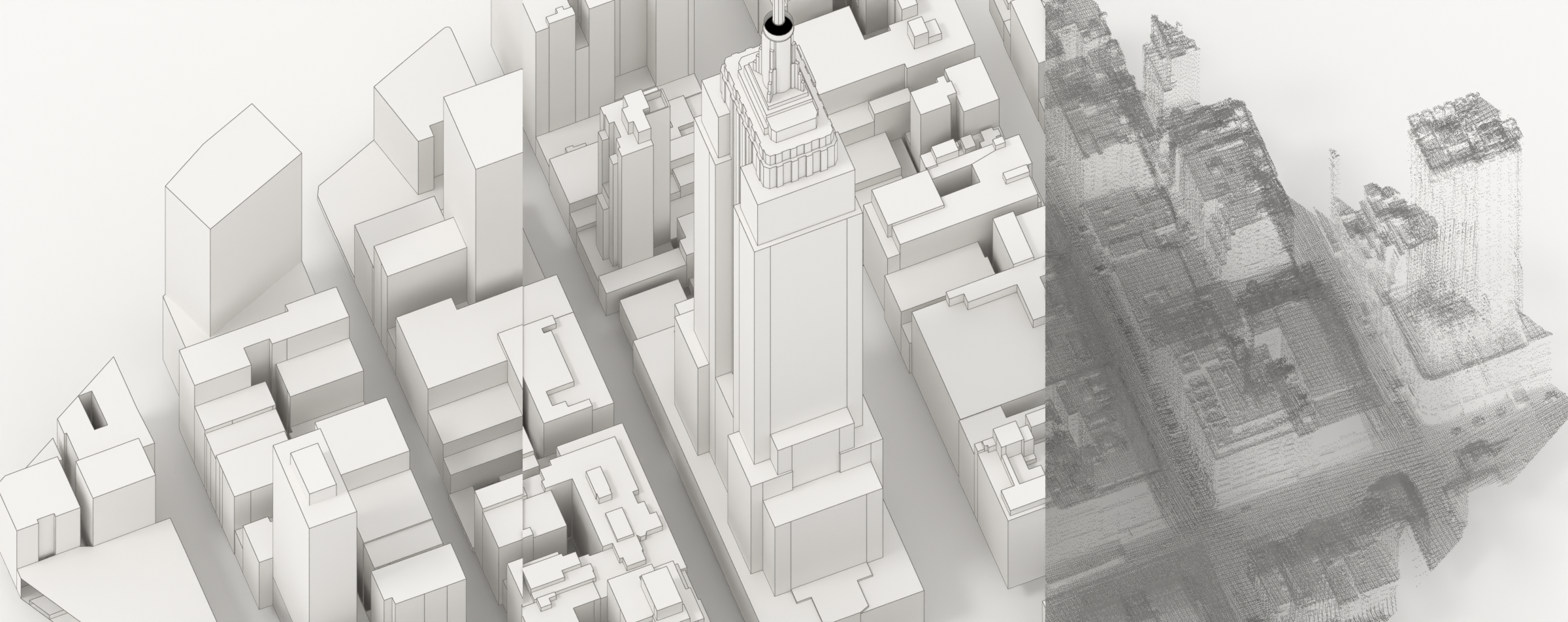
Getting up-to-date, accessible urban context that can be exported to BIM software is itself a problem in AEC. Urban data from sources like OpenStreetMap or Mapbox has questionable accuracy and raises questions about when it was last updated and whether it can be trusted. This problem is explained well in a talk by Alexander Groth, co-founder of CityWeft.
Arcol’s urban context is Mapbox-based, which shares the same failure. Below are 3D views of the same Manhattan block from different data sources.
Generative design
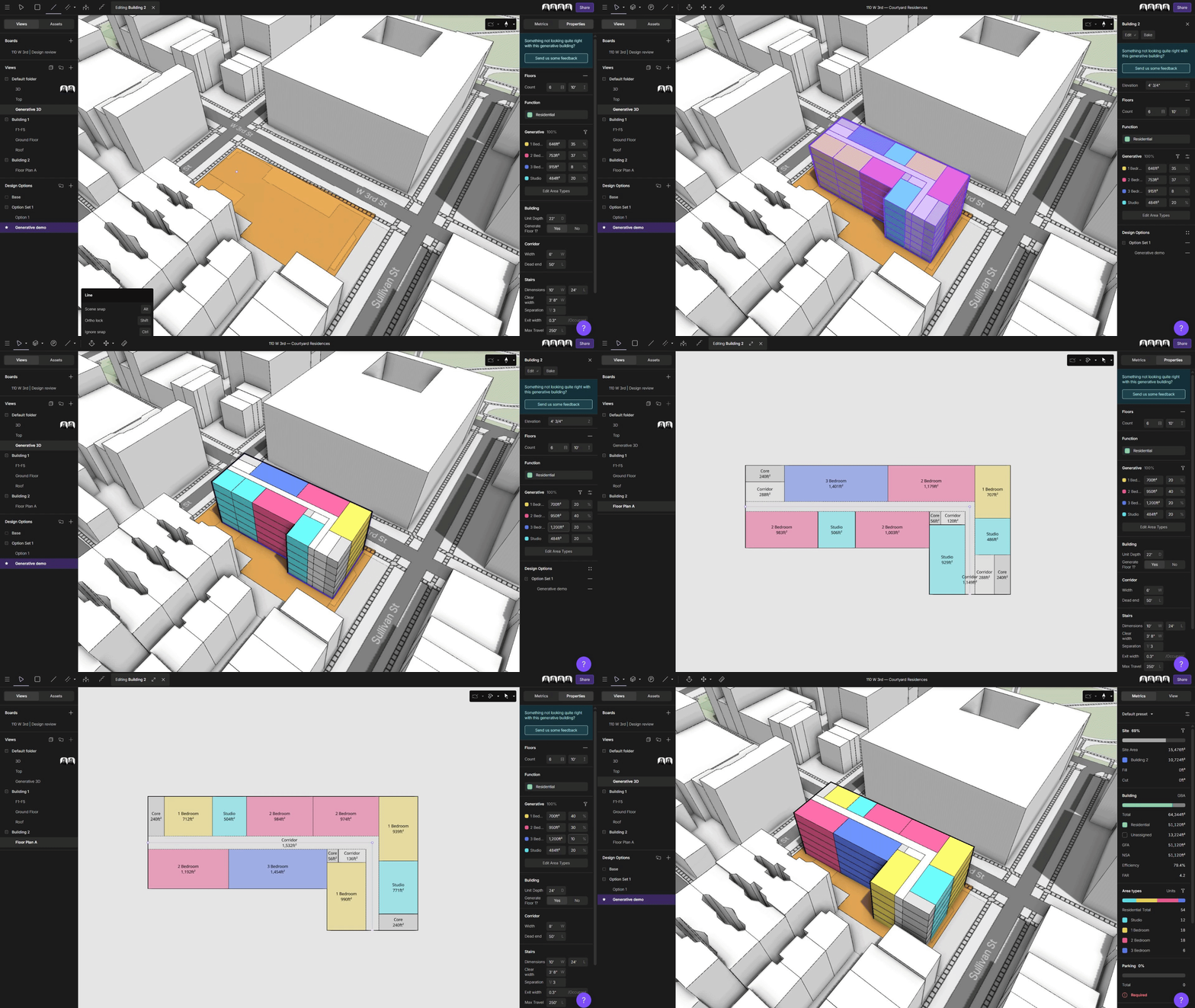
Arcol has a Generative Building tool that allows users to leverage a design and generate a floor layout based on input parameters like extents, area types, corridor width, etc. It is a nice and easy feature to work with, but TestFit did this 7 years ago.
Boards
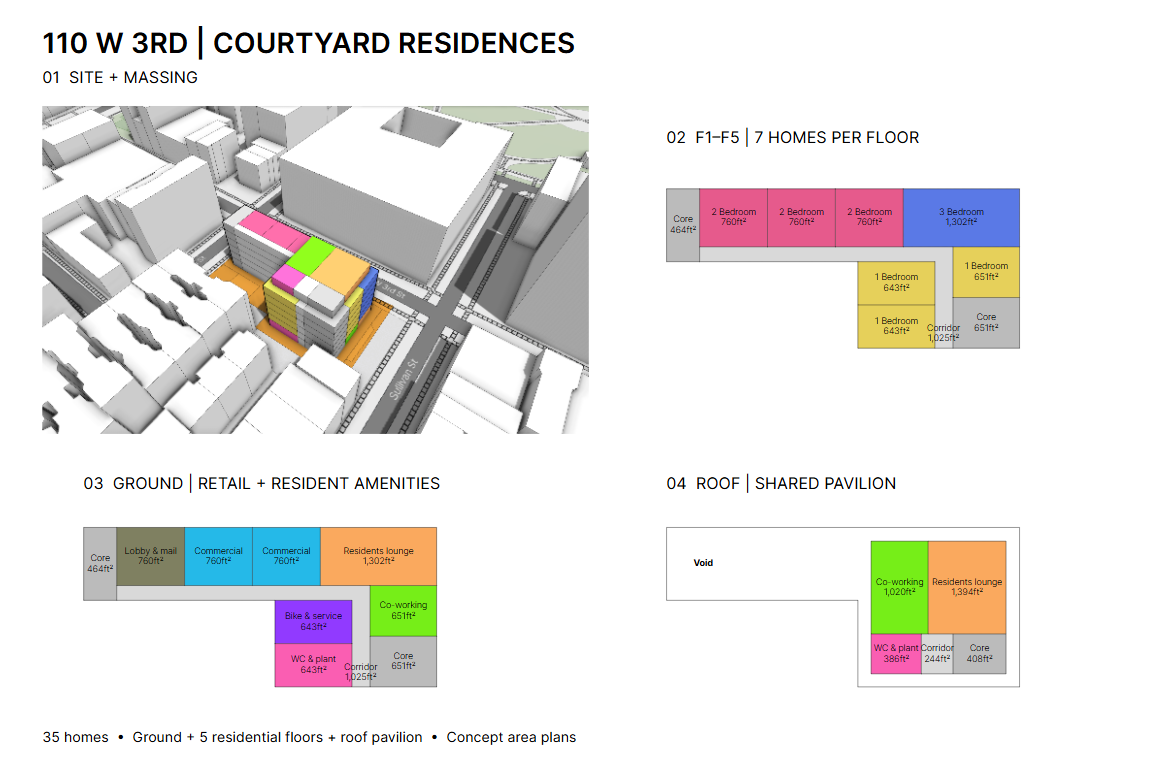
Arcol’s Boards feature feels like a breath of fresh air after using Revit’s sheets. It’s reminiscent of Miro or FigJam, with an intuitive interface that lets you drop in 3D model views, images, and building metrics. It’s convenient to use: you can see all sheets at once and leave Figma-esque comments.
API
As architectural work starts shifting more toward agentic workflows, it is crucial to build an environment for AI agents, ideally through API and MCP support. Arcol’s roadmap includes plans for an API, but the platform currently feels late to the party amid rapid developments in AI. Control through the user interface is helpful to work with Arcol through agents, though harder to scale reliably.
Also, with frontier AI models like Astra or Fable and new open-source AEC tools like Pascal Editor, the question is: what does it take to make software when everyone seems to be vibe coding, and why can’t consumers just generate their own products?
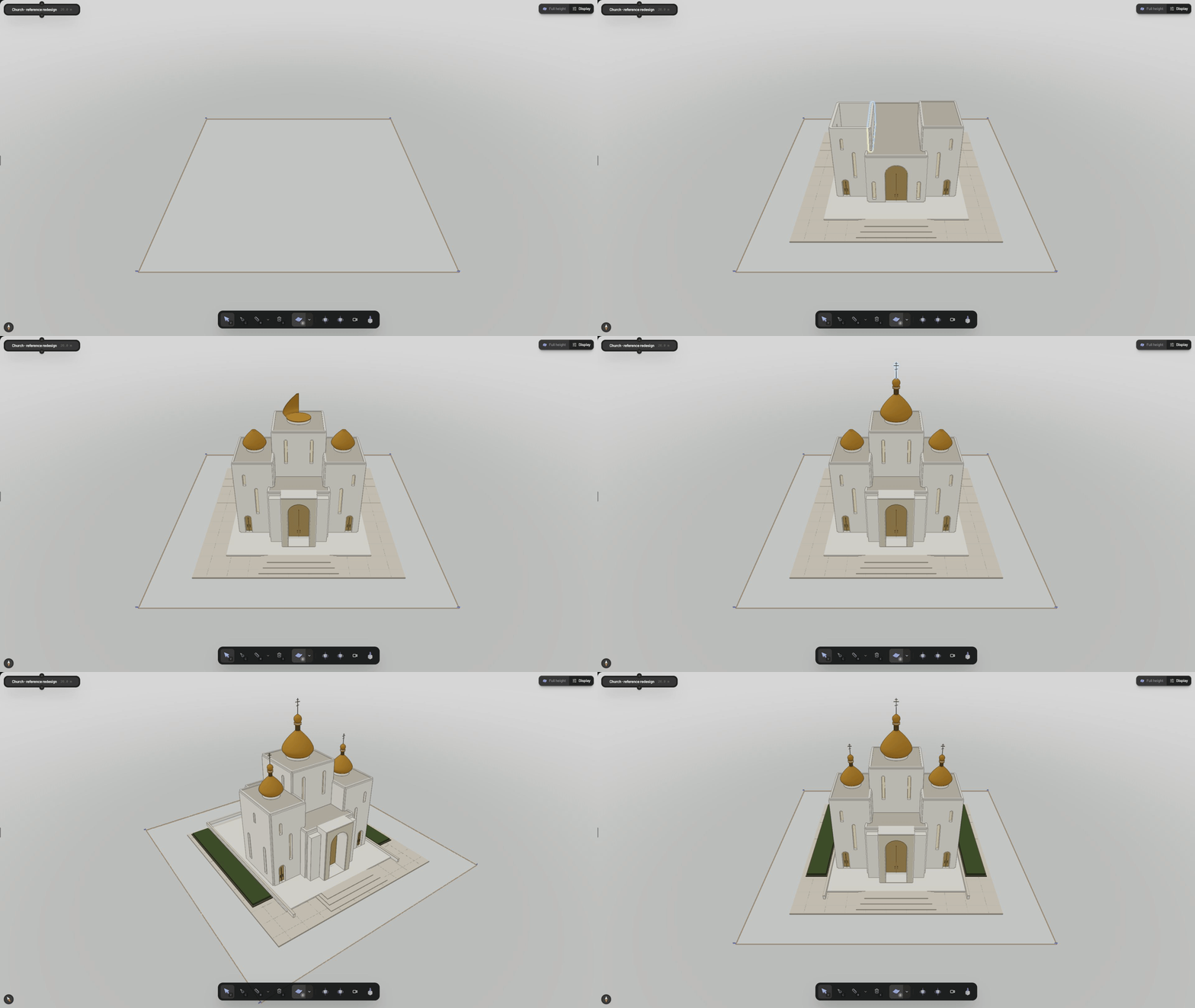
For reference, Pascal Editor is an open-source, Sims-esque, web-based design tool. It was released in July 2026, has an API and MCP support, and allows you to generate a building within minutes using a simple prompt and export it to IFC or JSON. It lacks some user experience polish and feels vibe-coded, and the number of Claude commits in its repository confirms it. But it’s still amazing for an open-source tool on which you can build a fancier version.
Adoption
Discovering Figma and switching to it from Adobe, after a graphic designer colleague described it as “Illustrator, but on the web,” felt effortless. If you were an Illustrator user at the time, its similar UI made it easy to adopt Figma and use it to collaborate on UI design.
Switching from Revit to Arcol was less intuitive: you may find yourself looking for a wall tool before realizing that Arcol doesn’t have the building-element tools you would expect. While Arcol’s roadmap included plans to create a building-element toolset, it prioritized geometry tools for conceptual design.
Summary
Arcol has a good foundation: it is designed as a web app rather than a desktop app, built for collaboration, and already has a clear hierarchy for site context, parking lots, and buildings, a structure lacking in incumbent tools. Its data schema is designed with a migration strategy to avoid backward-compatibility issues, which are among the biggest bottlenecks in AEC. So far, the product is of high quality. Mies van der Rohe’s saying “God is in the details” seems to fit, but Arcol’s glacial pace of development may simply be too slow to compete in a world where disruptive frontier AI models are lowering the barrier to creating software through agentic-first workflows.
As Peter Thiel argues, proprietary technology must be at least 10 times better than its closest substitute in some important dimension to create a monopolistic advantage. For Arcol, the question is whether its approach to collaboration can deliver that level of improvement over incumbent tools.